Election polls are fun. They can help you understand why politicians do and say the things they do. They can help you decide how to vote. And as long as the parties have access to polling, you should too.
But, as campaign polls proliferate like dandelions in April, they also become the source of a vast amount of the hooey that gets spewed by pundits.
Pollster Bob Penner has a long history of working for election campaigns. In a recent interview, he said the “literacy around polling” is pretty low.
Polling numbers naturally bounce around within their margin of error. “If you do the same method day after day, each day [the result] will be different,” said Penner, president and CEO of Stratcom. “That’s called sampling error.”
But if a pollster goes on TV and says the bouncing numbers are just sampling error, “he wouldn’t be on TV,” Penner said.
“So he’s got to construct a reason for why the numbers moved other than the probable real reason, which is just a natural variation in the polling method. So he says it’s because of the ads they ran today. Or it’s because of the media story that was on last night. Or it’s because this guy endorsed him. And that’s almost never true. It’s almost never the reason.
“But they’re out there saying it and people are at home consuming it and saying, ‘well, those ads really moved the numbers.’ ”
Socred Bob McClelland paid the price. Our series of dubious BC political moments continues.
By Tom Barrett TheTyee.ca
Editor’s note: This is the seventh in our “Some Honourable Members” series, depicting the more dubious moments in B.C.’s political history, brought to you by veteran muckrakers Tom Barrett and Tom Hawthorn, one a day until election day.
Late on the night of Feb. 26, 1985, B.C. labour minister Bob McClelland phoned a Victoria business known as Top Hat Productions. He’d had a fair bit to drink.
McClelland asked the woman who answered the phone if a girl could be sent to his room at the Chateau Victoria hotel. He asked how much he would have to pay for her company — about $100 an hour, as it turned out — and whether Top Hat took Visa.
We know these tawdry details because the Victoria police were watching Top Hat, one of about half a dozen escort agencies listed at the time in the Victoria Yellow Pages.
On Nov. 27, 1987, McClelland was called by the defence to testify in the trial of Top Hat’s operator, Arlie Blakely, who faced 19 counts of prostitution-related offences.
A Canadian Press account of McClelland’s court appearance describes him as “glum-faced,” entering the court by himself and refusing to look at the “nearly full” public gallery. He testified that a Visa receipt from Top Hat for $130 was indeed his.
A demand from Blakely’s lawyer, Robert Moore-Stewart, for “the story behind” the receipt was ruled out of order. McClelland told Moore-Stewart he did not tell the Top Hat receptionist what he intended to do with the girl.
A new poll suggests that British Columbians are more interested in spending on health and education than paying down the province’s debt or cutting taxes.
The online Ipsos poll, for Global TV, asked the following question:
“On which one of the following three items would you like to see the provincial government place the greatest priority over the next few years?”
Forty-six per cent of respondents replied “increasing funding for services such as health and education”; 35 per cent replied “reducing the provincial debt” and 15 per cent said “lowering taxes.” A further four per cent said they didn’t know.
The poll also asked: “If elected, how well do you think each of the parties would do at balancing resource development and environmental protection”?
Thirty-nine per cent said Adrian Dix and the BC NDP would strike about the right balance between development and the environment, while 29 per cent said the party would put too much focus on the environment.
Thirty per cent said Christy Clark and the Liberals would strike the right balance, while 49 per cent said they would put too much focus on resource development.
Fifteen per cent said John Cummins and the BC Conservatives would strike the right balance, while 35 per cent said they would put too much focus on resource development; 47 per cent said they didn’t know.
Twelve per cent said Jane Sterk and the Green party would strike the right balance, while 61 per cent said the Greens would put too much focus on the environment.
The poll was conducted Monday, April 22 and April 23, among 455 adult British Columbians drawn from a panel assembled by Ipsos. The company states a margin of error of plus or minus 4.6 per cent, 19 times out of 20. For more on polling methodology and controversies, see this story.
Find Tyee election reporting team member and contributing editor Tom Barrett’s previous Tyee articles here. Find him on Twitter or email him.
Wacky Bennett’s monorailmania. Latest in our look-back series ‘Some Honourable Members’. By Tom Barrett TheTyee.ca
This is the fifth in our “Some Honourable Members” series, depicting the more dubious moments in B.C.’s political history, brought to you by Tom Barrett and Tom Hawthorn, one a day until election day.
Even in an era defined by grand schemes and rip-roaring resource exploitation, the dreams of Swedish vacuum cleaner tycoon Axel Wenner-Gren stood out.
The international financier, who produced among other things the Electrolux vacuum cleaner, sold W.A.C. Bennett’s government on a massive plan to develop a 10-million hectare swath of B.C., through the Rocky Mountain Trench from the Yukon border to Prince George. It would feature mines, pulp mills and hydro dams, tied together with a 290 kilometre per hour monorail that would cost a billion dollars. (That’s more than $8 billion in today’s money.)
The plan caught the attention of Life magazine, which wrote in 1957 that “the land that Wenner-Gren would develop, now locally known as Wenner-Grenland, is an area of awesome beauty, of brilliantly coloured lakes, set in primeval forests of poplar and pine. The backed-up waters of the Peace River which runs from west to east would form the largest man-made reservoir in the world, 260 miles long and taking up to seven years to fill.”
The wilderness area — “almost the size of Ohio” — would be populated with “a string of 10 to 15 towns”; work on the dam would start in two years, the magazine reported.
Bennett and Wenner-Gren signed a deal that reserved the lands for the Swede’s company. Critics called it a giveaway; they were even more upset when they discovered that Einar Gunderson, a crony of Bennett’s and a former finance minister, was a director of the Wenner-Gren B.C. Development Co.
‘You will rue the day’
Opposition member Ran Harding called it “the biggest blunder ever committed by any government in B.C.’s history.” Harding warned Bennett: “You will rue the day you ever heard the name Wenner-Gren. The project will be the ruination of the Social Credit government.”
Wenner-Gren eventually lost enthusiasm for the potential of Wenner-Grenland and the monorail was never built. But Bennett’s government would dam the Peace as part of its “two rivers policy” that also saw development of the Columbia River’s power potential.
The Peace River power project is one of the biggest mega-projects in the history of B.C. It’s a measure of the times that the final outcome of Wenner-Gren’s vision pales in comparison to the original fantasy.
Find Tyee election reporting team member and contributing editor Tom Barrett’s previous Tyee articles here. Find him on Twitter or email him.
When he wasn’t drunkenly clubbing foes. Third in our series ‘Some Honourable Members.’
By Tom Barrett TheTyee.ca
Editor’s note: Here’s part three of “Some Honourable Members,” a Tyee series of vignettes depicting some of the more dubious moments in B.C.’s political past, brought to you by veteran muckrakers Tom Barrett and Tom Hawthorn, one a day until election day.
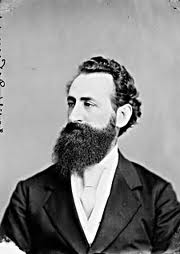
Amor De Cosmos
California in the mid-19th century provided endless opportunities for men looking to reinvent themselves and William Alexander Smith, a 28-year-old photographer and entrepreneur from the town of El Dorado (formerly Mud Springs) was a man with a thirst for self-reinvention.
So it was that Smith appeared before the California legislature on Feb. 17, 1854, with a petition to change his name to Amor De Cosmos. The name, he explained to the hooting frontier solons, summed up what he loved the most: “Order, beauty, the world, the universe.”
Four years later, the Nova Scotia-born De Cosmos — the name means “lover of the universe” — arrived in Victoria, another frontier town that allowed plenty of room for fresh starts. He would go on to make lasting contributions to journalism and politics in British Columbia and Canada, while helping to give the West Coast a reputation as a place where public life is always a little askew.
De Cosmos founded the British Colonist newspaper, which biographer George Woodcock describes as B.C.’s first politically independent journal. That journal lives today in the roots of the hyphenated Victoria Times-Colonist. The lover of the universe was also an MLA, an MP, the second premier of the province and a driving force behind B.C.’s entry into Confederation.
And, yes, he was also a bit strange.
“His methods were flamboyant but arresting,” Woodcock writes in British Columbia: A History of the Province. “He was often drunk when he spoke, and frequently he became involved in fights with opponents on whose heads he would freely use the heavy walking stick he carried.”
He rambled about Victoria in frock coat and top hat, a familiar and disputatious figure. Library and Archives Canada’s biography of De Cosmos puts it this way: “Always an eccentric individual, De Cosmos’s unconventional behaviour increased in his later years. He was reported to be afraid of electricity, refusing to have it in his house or even to ride on electric streetcars. A heavy drinker, he was given to making emotional speeches and, from time to time, street brawling.”
As he grew older, his eccentricities grew into paranoia and, eventually, insanity.
“He would stalk the streets of Victoria, hawk-like and haggard, staring into the faces of people as if he were seeking to revive some lost memory,” Woodcock writes.
He was declared of unsound mind in 1895 and died two years later, aged 71. Few turned out for his funeral, but today his unusual name symbolizes British Columbians’ appetite for the grandiose and off-kilter in public life.
Find Tyee election reporting team member and contributing editor Tom Barrett’s previous Tyee articles here. Find him on Twitter or email him.
A new election poll –- the second one released yesterday -– puts the New Democrats out front of the BC Liberal Party by 19 percentage points.
Although that gap is widely expected to narrow between now and the May 14 election, it is worth observing that only two B.C. elections in the past 40 years have been decided by more than 10 percentage points. (The BC Liberals won with a 36.1-point margin in 2001 and Social Credit won by 10.1-points in 1975.)
In today’s Ipsos Reid poll, 48 per cent of decided respondents said they would vote for the NDP if the election were held tomorrow. The Liberals received 29 per cent, the B.C. Conservatives 11 per cent, the Greens nine per cent and other parties, including independent candidates, received three per cent.
About one in five –- 19 per cent -– of all respondents to the online poll were undecided or had no preference.
The results are quite close to those of yesterday’s other campaign poll, from Angus Reid, which suggested a 17-point gap between the two leading parties. (The Ipsos figures represent decided voters while the Angus Reid numbers are for those who are decided and leaning.)
The Ipsos poll was conducted for Global TV between Thursday, April 11 and Sunday, April 14, among 800 B.C. adults drawn from an online panel. Ipsos states a margin of error of plus or minus 3.5 per cent, 19 times out of 20.
As the provincial election campaign gets underway, a new poll suggests the New Democrats have a 17-point lead on the governing BC Liberals.
The Angus Reid poll doesn’t offer much good news for the Liberals. Some 61 per cent of respondents agreed with the statement: “It is time for a change in government in British Columbia — a different provincial party should be elected into power.”
Only 22 per cent agreed with the statement: “It is not time for a change in government in British Columbia -– the BC Liberals should be re-elected.” A further 17 per cent were unsure.
Of those respondents who said they voted for the Liberals in 2009, only 46 per cent said the government should be re-elected.
Among decided and leaning voters, the NDP leads with 45 per cent support, with the Liberals at 28 per cent, the Green party at 13, the B.C. Conservatives at 12 and others, including independents, at three per cent.
Socred Agnes Kripps hated ‘that nasty little three-letter word.’ First of ‘Some Honourable Members,’ our new daily series.
By Tom Barrett TheTyee.ca
Editor’s note: With hundreds of legislative contenders competing in our quadrennial Democratic Games, The Tyee offers the first in a series of vignettes depicting some of the more dubious moments in B.C.’s political past. Watch for these daily heritage moments, brought to you by veteran muckrakers Tom Barrett and Tom Hawthorn, each day till election day.
Inevitably, most of those bidding for our votes will wake up on May 15 as just one more Honourable Member for Palookaville. To these losers we say: nice try. To the winners we say: pay close attention to these stories. This could happen to you.
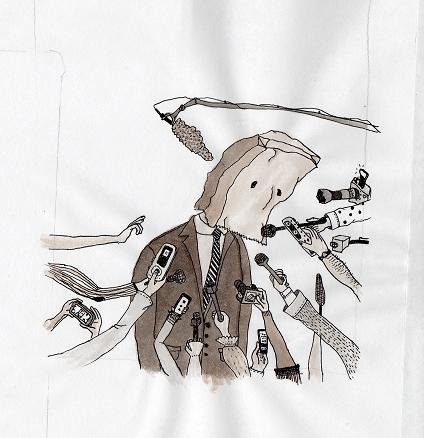
Some Honourable Members, a series of vignettes of shame throughout BC political history, starts today on The Tyee and runs through election day. Illustration by Jessie Donaldson.
As the paisley-patterned ’60s cast their swinging spell upon the world, the B.C. Social Credit party stood ready to repel the sexual revolutionaries at the gates.
Their shock troops were the Socred Women’s Auxiliary, the bedrock of the party and a perennial source of cheap laughs for the big-city media. Urban sophisticates might chuckle when WA members demanded the government circumcise rapists, but the party faithful knew what the ladies were talking about.
But no one knew what Socred backbencher Agnes Kripps was talking about on Feb. 19, 1970, when she rose in the house to say she hated sex.
Not the act, as it turned out, but the word: “That nasty little three-letter word,” she said, “carries with it a stigma and a distorted connotation. That word, Mr. Speaker, can have 100 different meanings to 100 different people, and while we all spell it the same way, there the similarity ends.”
After a quick dip onto the Oxford Dictionary for the etymology of the term, Kripps revealed that “today, sex is still a confused word.”
As honourable members snickered, she ploughed on: “Because so many shades of meaning have been written into the word, I have come to hate it, and I propose” — more laughter from MLAs threw her off for a second here — “I hate the word sex, and I propose that we throw it out of the vocabulary of education.
“Let’s find a substitute and start all over again.”
As elected representatives chorused “No! No!” Kripps confided, “Mr. Speaker, I didn’t know I was going to be the one blushing.”
She then offered a substitute.
“Let’s call it… listen carefully now, let’s call it, for example, BOLT. That stands for… Biology on Life Today: B-O-L-T.”
As MLAs collapsed in mirth, Kripps explained that BOLT was “just an example. You may have other words that you would like to use.”
Added Kripps: “By eliminating the word sex and replacing it with BOLT or any other word — any other word — we will remove the blindfolds, the smirks, the embarrassment and, above all, the ignorance.”
“Call it Social Credit,” smirked one member.
As the house dissolved into hysterics, Kripps called on the Speaker to restore order: “Mr. Speaker, would you please break your gavel. Thank you.” (That’s the official Hansard version. Other accounts insist she said: “Mr. Speaker, won’t you please bang that thing of yours on the table?”)
It was left to the next speaker, Socred MLA Herb Capozzi, to wrap things up. “On behalf of all of us,” he said, “I would certainly welcome you, Mr. Speaker, to our bolt new world and I will certainly say that, if nothing else, she had everyone bolt upright in their chairs.”
Sadly, Kripps’s recommendation would go unheeded. BOLT, it seems, wasn’t better than sex.
Find Tyee election reporting team member and contributing editor Tom Barrett’s previous Tyee articles here. Find him on Twitter or email him here.
It’s how we signify the official start of election campaign season, with all its rites and rules By Tom Barrett TheTyee.ca
Writ: Dropping like it’s hot.
The provincial election campaign begins tomorrow, Tuesday, April 16. Soon politicians will be begging you for your vote and warning of the consequences of voting for those other guys.
But wait, you say. Isn’t that what they’ve been doing for the past couple of months? Well, yes. The real election campaign began a long time ago. But the official start of the campaign does bring some significant changes.
For a start, there are spending limits.
Parties and candidates have been subject to limits since Feb. 15, but those limits change on April 16. During the “pre-campaign period” from Feb. 15 to April 15, no political party can spend more than about $1.15 million. From the 16th to election day on May 14, they are allowed to spend up to $4.6 million.
Individual candidates are allowed to spend about $73,000 during the pre-campaign period and the same amount during the official campaign.
Limits cover everything from renting offices to TV ads.
Before the official campaign kick-off, there is no limit on third-party advertising campaigns like that of Concerned Citizens for B.C. or the B.C. Teachers Federation. But after the election is called on the 16th, third parties are allowed to spend no more than about $3,140 in a single riding, or about $156,900 in the whole province.
A new poll suggests the NDP is ahead of the governing BC Liberals by 12 percentage points on the eve of the official kickoff to the May 14 election campaign.
The Ekos poll found a considerably smaller lead for the NDP than an Angus Reid poll taken in mid-March, which had the New Democrats ahead by 20 points. However, the Ekos numbers are little changed from the last Ekos B.C. poll, taken at the beginning of February.
The new poll, conducted April 3 to 10, puts the NDP at 39 per cent, the BC Liberals at 27 per cent, the BC Greens at 16 per cent and the BC Conservatives at 13 per cent among decided and leaning voters.
Among likely voters, the NDP lead grows to 17 points. Among those deemed most likely to actually turn out at the polls, the NDP receives 45 per cent, the Liberals 28, the Greens 11 and the Conservatives 13.




 Rannygazoo